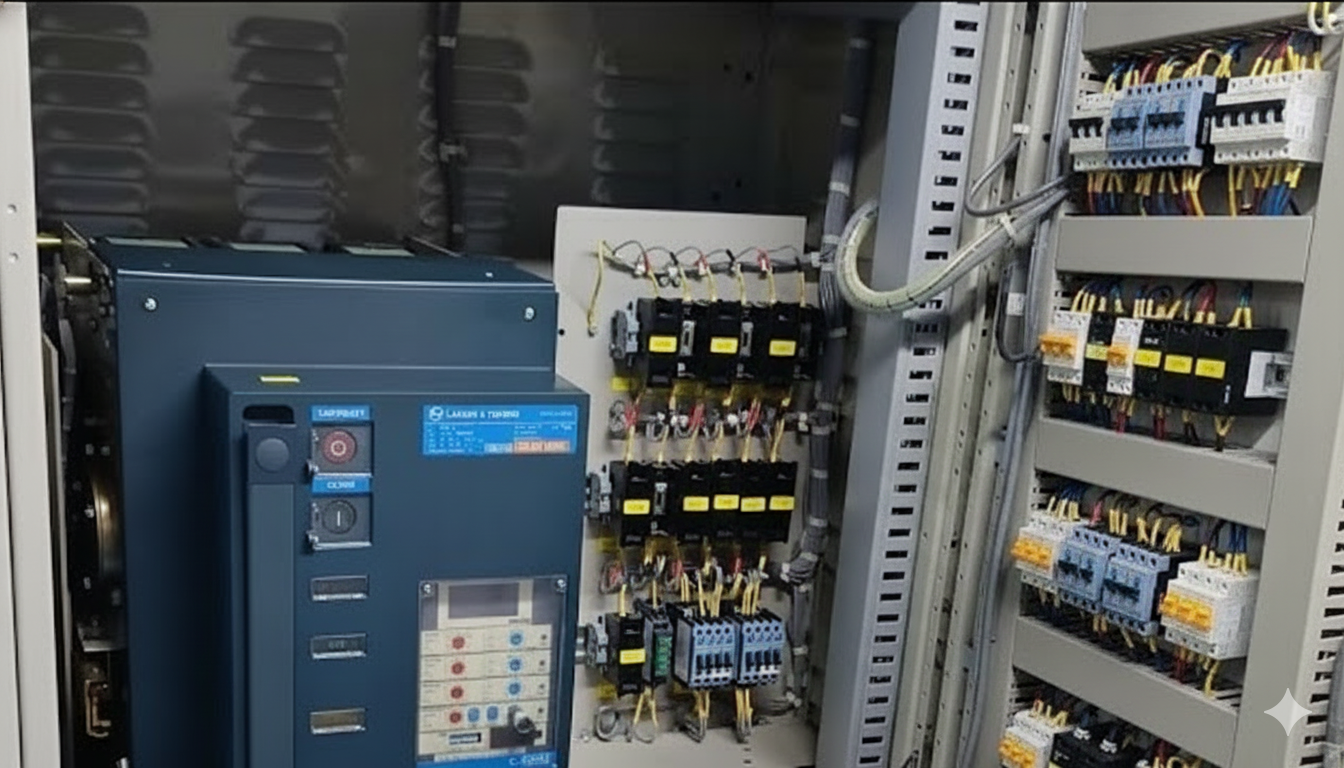
Air Circuit Breaker (ACB) coil Protection Release and Mechanism
Introduction to ACB coil
There are basically three types of air circuit breakers. Close call is used to turn on the breaker and activates the mechanism of the breaker as soon as the correct signal is received. The trip call or shut call is used to turn off the breaker and immediately open the breaker when a fault or command occurs. Under voltage coil or UV coil automatically trips the breaker when the voltage of the system drops below normal, which ensures system safety.
Spring charging system
Turning the ACB on or off requires certain mechanical forces, which make up the spring charging system. The motor spring charges on most ACBs, but manual charging can also be done if needed. When the spring is fully charged, enough energy is stored in the mechanism to turn the breaker on or off.
How Closing Coil Works
When the close Coil is activated, the moving contact of the breaker is connected to the main contact and the breaker is switched on. If the UV coil is not active, the breaker cannot normally be turned on because the mechanism is designed as a fail-safe. Without the proper voltage on the UV coil, the closing mechanism remains locked and prevents the breaker from turning ON.
Under-voltage coil (UV)
The UV coil is inside the plunger when it receives the 110V supply and can remain in the breaker on state. When the supply runs out, the plunger comes out and trips the breaker immediately. It is designed in such a way that no damage or instability occurs in the circuit when the supply fails. If the breaker is turned on when the UV coil is not present or is inactive, it is not suitable for system security.
Temporary disabling of UV coils
The UV coil is temporarily bypassed during maintenance or special circumstances. This allows the plunger to be fixed and the breaker to be turned on. This is a temporary solution and it is important to always keep the UV coil active in normal operation.
The correct interpretation of the protection release
The protection release system of the air circuit breaker detects various types of faults and trips the breaker. The release has four main functions.
Overload protection detects excess current over a long period of time. Short-circuit protection is fast faulting when there is a sudden high current flow. Instant Trip detects the fault very quickly and turns off the breaker within a few milliseconds. Ground fault protection protects the system by detecting the leakage of current towards the ground.
Fault status and reset
A trip to the breaker fault cannot be turned back on until the release unit is reset. When the release plunger comes out in front, it indicates that the breaker is still in the fault lock state. After removing the fault, resetting the release returns to the previous state and then the breaker can be turned on again.
Parts and mechanism of the breaker
There are several important parts within the ACB.
Main contact establishes the main connection of the breaker. Moving contact connects to the main contact and turns the circuit on or off. Sparking controls the arc formed during contact separation and protects the main contact from corrosion.
The spring charge motor prepares the power to drive the mechanism of the breaker. CT or current transformer measures the current and sends it to the release unit. Drawout mechanism performs the function of inserting or ejecting the breaker into the circuit and the indication system shows the on, off or fault state of the breaker.
The responsiveness of the modern ACB
The ACB of existing brands detects errors quickly and provides reliable tripping. Some earlier models showed a delay in tripping, but modern protection release units do not have this problem. Quick response is very important for system security.
An air circuit breaker is one of the most important safety devices in any large electrical system. Its close call, trip call and UV call together handle the basic control of the breaker. Protection release protects the system from damage by identifying different types of faults. The correct mechanical parts ensure the long-lasting and reliable operation of the breaker. The ACB works stably for a long time if the maintenance and safety functions are properly followed. An ACB delivers stable operation for years when proper maintenance and safety practices are followed, especially in critical setups like an
electrical control panel in Kolkata.